Showing posts with label Poetry Corner. Show all posts

Wednesday, December 28, 2011

Book Report: Women, Food & God by Geneen Roth


The beginning of a New Year feels like the perfect time to write about Women, Food and God, because our culture touts January 1st as the time to dive into yet another punishing diet, take up a grueling work out routine and finally transform yourself into A Skinny Person Who Has It All and Is Blissfully Happy.

Geneen Roth calls this Sisyphean. That rock is doomed to roll back down the hill.

I've just finished reading this book for a second time because I wanted to pass it along to a friend and fellow blogger. The first time, I read the entire thing on a plane ride in a few hours. This time, I took my time and read it slowly, a chapter every other night or so. (The difference between inhaling three pieces of sheet cake and savoring one really good piece of chocolate.)

The premise of Women, Food and God is that many of us are disconnected from our bodies, and therefore from our most direct access to our divinity. This book intends to help women come back into their bodies, respect them, listen to them and stop their incessant battle with food.

No small feat.

What I both love and hate about this approach is that it demands that you address the source of the problem. Getting To The Bottom Of It is hugely attractive in theory. Once and for all. But this isn't about getting in touch with your emotions surrounding food so you can untangle every past hurts or your parents' failings. It's about sensing those emotions so you can see that you have attached them to food, and then move beyond them.

In practice however, I find myself deeply inclined to bolt. I have many tactics for this. My personal favorite is "This doesn't really affect me. My problem with food isn't this bad. I've never eaten an entire cake. I don't have fifty pounds to loose." Comparisons keeps me from meeting my issues at the place where I am, and therefore keep me from dealing with them.

Another favorite is to notice how those issues might be showing up in the life of someone close to me. As I re-read, I noticed the notes I had made in the margin the first time around. They were rife with connections between Mrs. Roth's words and other people in my life. Eek. Another way of avoiding my issues.

Then there are the thousand ways I "bolt" in my day to day. So much of it is habitual and totally unconscious. I wake up in the morning and often one of the first things I do is get sucked down the rabbit hole of the internet. Like Alice, I float there in a nether region, totally disembodied, while hours float by. It's far more compelling for me than television. I saw an article on Arianna Huffington in Vogue the other day that said "She has recognized that the entertainment of our times is self expression." That hit home for me. What else am I spending my time on the internet doing than crafting a facsimile of who I'd like to be? It's a way of adopting an identity without really inhabiting it. But it sure looks good. You can start to understand what seduces people into spending 20 hours a day gaming on World of Warcraft. It's a life within a life- but you can turn it into anything you like effortlessly. And yet, it comes at a great cost to your actual life. The one that is sacred.

I also love to bolt by shopping. There again is an element of fantasy for me. Just yesterday I was in Target checking out the after Christmas SALE (my biggest turn on!) and found myself staring longingly at a golden galvanized bin. The sort you would put drinks in at a party. As I size it up, I imagine the party I'd have- it is suddenly filled with ice and Vueve Clicquot. All my friends are gathered around in tuxedos and sequins, popping corks merrily, glasses brimming with foam. Everyone is laughing. Everyone loves me. We are all living to the fullest. Our life is uproariously good. How much is the tub that will bring me all of this? Six dollars? Why, that's my emotional price point!

I'm perfectly willing to pay six dollars to buy a piece of that fantasy. But it disappears immediately. Instead, I come home with a big clunky galvanized tub that I have to make room for- inciting a frenzy of organizing and de-junking (probably more bolting in that compulsion. I am Virtuous and Good when I fill a bag for the thrift shop. I am Not Attached to Earthly Stuff.) There it sits gathering dust. And even if I do someday have the Champagne Party of my Dreams, it can never match up to the fantasy and afterwards I am left feeling slightly empty and deflated.

Have you noticed that I've left food bolting for last? I suppose it's the most embarrassing and perhaps the one I bring the least awareness to. I'll be cleaning up after dinner, and rather than put the last spoonful of pasta or curry into a Tupperware (or the trash) I'll put it in my mouth. Or after I finish tidying the kitchen, I feel as though I deserve a treat, and I'll pop in a chocolate. Sometimes I feel a little twinge of guilt or disgust, but mostly, I feel nothing about it. Numbness.

I am capable of genuinely savoring food, a real gift from my parents to me. But another thing I've noticed is that I will allow myself to become so ravenously hungry that I am unwilling to take the time to prepare food for myself. I often rely on Eric to cook for me. Or, I will raid the cupboards and pull out something that can be ready Right. This. Second. Chips and Salsa. A sleeve or Oreos. Crackers and Cheese. A bowl of nuts. Cereal. Can of Soup. Instant. Instant. Instant.

So my job is to bring awareness to those moments. Instead of stuffing, I am learning to pause and think. Notice my body. Notice if I am hungry or not. Notice what my body actually wants to eat, not what my mind tells me I want. It may not be easy at first, but luckily the only tool I need is this body I am learning to live in.

Have you read this book? What did you think of it? Can you offer any ideas on how to inhabit and savor this one wild and precious life?

Monday, August 15, 2011

Poetry Corner: Want the Change


Sonnets to Orpheus, Part Two, XII

Want the change. Be inspired by the flame
where everything shines as it disappears.
The artist, when sketching, loves nothing so much
as the curve of the body as it turns away.

What locks itself in sameness has congealed.
Is it safer to be gray and numb?
What turns hard becomes rigid
and is easily shattered.

Pour yourself out like a fountain.
Flow into the knowledge that what you are seeking
finishes often at the start, and, with ending, begins.

Every happiness is the child of a separation
it did not think it could survive. And Daphne, becoming
a laurel,
dares you to become the wind.

~ Rainer Maria Rilke ~

I found a snippet of this poem in a recent O Magazine and knew immediately that I had to find and read it in it's entirety. Though my adult life has always been full of external changes, (new jobs, new homes, and a new continent every year or so) I have felt a definite shift in my internal world since we moved to Hawaii. I feel as though living on an island has forced me to confront myself in a way that I never have before. It's not always pleasant.

Eric and I have recently arrived at a place in our relationship (5 years of marriage plus five years of life together before that!) where we had to either face the pain of growth or walk away. The struggle isn't over yet- being married seems to only get harder the further along we go. Yet, I find it hopeful and encouraging that we have chosen to face our issues instead of ignore them. We peered into the abyss and took a step back again. That seems better than pretending it isn't there. (The alternative would be to continue out into thin air, like the Coyote in the Warner Brothers Cartoons. There is a moment of ignorance before the sickening reality floods over you- and you are sent plummeting to the bottom.)

The hardest part of change is to focus my effort on myself instead of the people around me. After all, you can't change other people but you can change yourself. I've heard it said (heck, said it myself!) a million times and yet, it is such a difficult thing to practice. Our egos are so convincing- so manipulative, so clever.

If only he would do this, then I could do that. It would be so easy then! See how that keeps me from examining my own heart? See how it puts off my growth until later? There are a thousand tiny ways that I do this in my life with Eric- out of habit, out of a comfortable routine that we've built in our ten years together. Simple things like expecting him to do the chores I don't like to do- all the gross things like taking out the garbage or squashing bugs. And I feel resentment when he doesn't do them- but why?

I'd prefer to think of him as lazy and forgetful than to acknowledge the fact that I don't want to take out the smelly stinky old garbage and would rather pester him into doing it. I'm lazy and mean! And that resentment doesn't disappear. He feels it and absorbs it and I hang onto it until next silly example of his imperfection. It builds a wall between him and I long after the garbage is gone.

And what I see now is that that resentment takes time to undo. It takes mindfulness to undo it. It requires that I continue to examine my own actions, thoughts and feelings as an impartial observer. And that I let go of what is over and what hasn't come yet and embrace this moment now. I can take this chance now to look at myself and continue the eternal, perpetual changing that makes me alive. Then take out my own damn garbage.

Monday, April 11, 2011

Poetry Corner: Gnostics on Trial

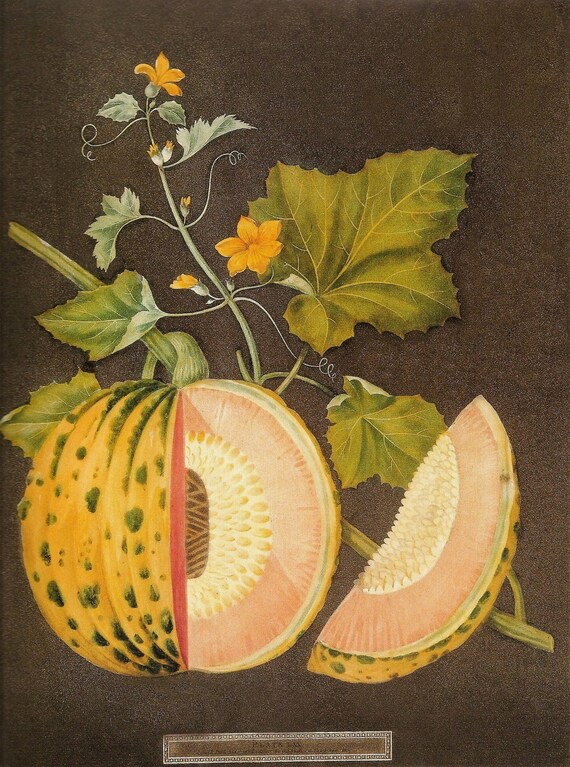
Melon Print from the extraordinary shop Naturalist Collection.


Let us make the test. Say God wants you
to be unhappy. That there is no good.
That there are horrors in store for us
if we do manage to move toward Him.
Say you keep Art in its place, not too high.
And that everything, even eternity, is measurable.
Look at the photographs of the dead,
both natural (one by one) and unnatural
in masses. All tangled. You know about that.
And can put Beauty in its place. Not too high,
and passing. Make love our search for unhappiness,
which is His plan to help us.
Disregard that afternoon breeze from the Aegean
on a body almost asleep in the shuttered room.
Ignore melons, and talking with friends.
Try to keep from rejoicing. Try
to keep from happiness. Just try.


found via the always inspiring Writer's Almanac. Check out Linda Gregg's Books here.

Friday, December 31, 2010

A Poem to Remind Us All, Poets or Not.


I've just woken up unreasonably early, my head jumbled with jigsaw puzzle pieces of bad dreams and worries that don't quite fit together. Perhaps it's the start of a New Year that has got my subconscious so worked up. Making a list of resolutions seems so painfully cliche (and I'm too muddled to get it right at the moment anyway.) Instead, I thought of this poem, with it's advice to "avoid screens" and honor silence. (The photo above is from this lovely apartment.) Wishing you a New Year filled with clarity and peace.

Love,

Becky

How To Be a Poet

BY WENDELL BERRY

(to remind myself)

i

Make a place to sit down.
Sit down. Be quiet.
You must depend upon
affection, reading, knowledge,
skill—more of each
than you have—inspiration,
work, growing older, patience,
for patience joins time
to eternity. Any readers
who like your poems,
doubt their judgment.

ii

Breathe with unconditional breath
the unconditioned air.
Shun electric wire.
Communicate slowly. Live
a three-dimensioned life;
stay away from screens.
Stay away from anything
that obscures the place it is in.
There are no unsacred places;
there are only sacred places
and desecrated places.

iii

Accept what comes from silence.
Make the best you can of it.
Of the little words that come
out of the silence, like prayers
prayed back to the one who prays,
make a poem that does not disturb
the silence from which it came.

Thursday, July 01, 2010

Poetry Corner: Designed To Fly

When I discovered this poem on the Writer's Almanac a few days back, the hair on my arms stood on end. This is exactly what I've been learning lately. I must teach myself to trust that things will do what they are meant to do without my compulsion for control.


Designed to Fly

by Ellen Waterston

After ten hours of trying
the instructor undid
my fingers, peeled
them one by one
off the joystick.
"You don't need
to hold the plane
in the air," he advised.
"It's designed to fly.
A hint of aileron,
a touch of rudder,
is all that is required."

I looked at him
like I'd seen God.
Those props and struts
he mentioned, they too,
I realized, all contrived.
I grew dizzy
from the elevation
from looking so far
down at the surmise:
the airspeed of faith
underlies everything.
Lives are designed
to fly.

"Designed to Fly" by Ellen Waterston, from Between Desert Seasons. © Wordcraft of Oregon, LLC, 2008. Reprinted with permission. (buy now)

Saturday, January 17, 2009

So and So Said Volume 7


From the dark nursery rhyme The Babes in the Wood. Click on the image to see it larger.

Monday, December 15, 2008

A Lean Christmas 'Aint so bad: A Poem and a Song


Did you see this wonderful poem about Christmas on the Writer's Almanac last week? It reminded me of this Johnny Cash song with the same theme: A lean Christmas reminds us of what Christmas really means.

Tuesday, May 20, 2008

A Poem I did not write about Priorities


"Advice to Myself" by Louise Erdrich, from Original Fire: Selected and New Poems.


Leave the dishes.
Let the celery rot in the bottom drawer of the refrigerator
and an earthen scum harden on the kitchen floor.
Leave the black crumbs in the bottom of the toaster.
Throw the cracked bowl out and don't patch the cup.
Don't patch anything. Don't mend. Buy safety pins.
Don't even sew on a button.
Let the wind have its way, then the earth
that invades as dust and then the dead
foaming up in gray rolls underneath the couch.
Talk to them. Tell them they are welcome.
Don't keep all the pieces of the puzzles
or the doll's tiny shoes in pairs, don't worry
who uses whose toothbrush or if anything
matches, at all.
Except one word to another. Or a thought.
Pursue the authentic-decide first
what is authentic,
then go after it with all your heart.
Your heart, that place
you don't even think of cleaning out.
That closet stuffed with savage mementos.
Don't sort the paper clips from screws from saved baby teeth
or worry if we're all eating cereal for dinner
again. Don't answer the telephone, ever,
or weep over anything at all that breaks.
Pink molds will grow within those sealed cartons
in the refrigerator. Accept new forms of life
and talk to the dead
who drift in though the screened windows, who collect
patiently on the tops of food jars and books.
Recycle the mail, don't read it, don't read anything
except what destroys
the insulation between yourself and your experience
or what pulls down or what strikes at or what shatters
this ruse you call necessity.

Thursday, February 21, 2008

A Poem I did not write about the amazing beautiful world


Poem: "All That Is Glorious Around Us" by Barbara Crooker from Radiance. © Word Press, 2005.

All That Is Glorious Around Us
(title of an exhibit on The Hudson River School)

is not, for me, these grand vistas, sublime peaks, mist-filled
overlooks, towering clouds, but doing errands on a day
of driving rain, staying dry inside the silver skin of the car,
160,000 miles, still running just fine. Or later,
sitting in a café warmed by the steam
from white chicken chili, two cups of dark coffee,
watching the red and gold leaves race down the street,
confetti from autumn's bright parade. And I think
of how my mother struggles to breathe, how few good days
she has now, how we never think about the glories
of breath, oxygen cascading down our throats to the lungs,
simple as the journey of water over a rock. It is the nature
of stone / to be satisfied / writes Mary Oliver, It is the nature
of water / to want to be somewhere else, rushing down
a rocky tor or high escarpment, the panoramic landscape
boundless behind it. But everything glorious is around
us already: black and blue graffiti shining in the rain's
bright glaze, the small rainbows of oil on the pavement,
where the last car to park has left its mark on the glistening
street, this radiant world.

Monday, November 05, 2007

The World's Fair 1892


The following exerpt is from the Writer's Almanac. I like the list of now commonplace things that most Americans had never seen or conceived of 115 years ago.

"On October 25th, 1892 the city of Chicago officially dedicated the World's Columbian Exposition. The planning had run behind schedule, so the fair wasn't actually held until the following summer. A giant "white city" was built in the style of classical architecture along the shore of Lake Michigan, and at night, everything was lit up with a string of electric lights, the first time electric lights were used on such a large scale in America. In fact, in was at the Chicago World's Fair that most Americans saw electricity in use for the first time.

The Chicago World's Fair was also the place where most Americans first saw postcards, fiberglass, the zipper, the ice cream cone, Cracker Jack, Quaker Oats, Shredded Wheat, belly dancing, spray paint, the Pledge of Allegiance, and the Ferris wheel.

The Ferris wheel at the fair was 264 feet high, carried 2,000 passengers at a time, driven by two 1,000 horsepower steam engines turning on a 45-foot axel — the largest single piece of steel ever forged at that time. It was the most successful world's fair ever held in the United States. In its half-year of existence, it drew 27 million visitors, or about half the American population at the time. The novelist Hamlin Garland wrote to his parents, "Sell the cookstove if necessary and come. You must see the Fair!" "

Tuesday, October 02, 2007

A Poem I did not write about the joys of flying


"Vancouver to Edmonton" by Barbara Bloom, from On the Water Meridian © Hummingbird Press, 2007. Reprinted with permission. (buy now)

Vancouver to Edmonton

Some of the passengers read; others sleep.
Beside me, my husband fills in the squares of his crossword—
word after word taking shape
as fast as he can write. No one
looks out the windows; even the children
are busy doing something else.

But outside, it's like we're in heaven,
with the puffy white clouds,
sun playing along the surface
so bright it's almost impossible to look,
but I look anyway. Then the clouds
give way to a glacial lake,
the aquamarine of a tropical ocean,
then snowfields,
sharp-sided peaks,
and forests so green they are almost black.

The man on the aisle seat
folds up his newspaper. My husband
adds another word
before closing his book.
An announcement comes on
to set our watches ahead an hour.
The toy fields, houses, and barns
take on more reality
as we begin our descent.
There's a green tractor! A barn with a red roof,
cows and horses grazing together. A dog
running out to meet a car.

Whether we were in heaven or not up there
seems beside the point now, as the plane lowers
over fields and highways,
and bumps down on the runway.
Soon we will be rushing out to hail cabs
or scanning the crowds in the airport
for the one familiar face, and the day
will push us forward, with its traffic,
its Mountain Time, its ordinary joys.

Tuesday, September 11, 2007

One Wild and Precious Life

I am sure that those of you who read this blog in the United States will be hearing a great deal about the September 11th Attacks. In China however, it is just another day. I thought this tragic day was remembered quite elegantly by the folks at the Writer's Almanac. The Mary Oliver poem they chose is filled with hope and a celebration of the unique things that make life so precious. I thought it a nice antidote to the way this day is often covered in the media. Here is a small excerpt.


"On this day in 2001 terrorists flew two planes into Twin Towers in New York City, causing both towers to collapse. In the weeks following the attacks, many writers and other artists wondered how to respond to what had happened.

One of the first groups of writers to take action were the reporters for The New York Times, who began writing portraits of the victims in a special section of the paper called "Portraits of Grief." The journalists involved decided that they would try to write portraits of every victim of the attack whose family they could reach. And they decided that the stories would focus on how the victims lived, not how they died.

The portraits were shorter than the average Times obituary, at about 150 words, and they skipped things like college degrees, jobs held, and names of surviving family members. They just tried to capture some detail or anecdote that would express each person's individuality. There was a firefighter who wore size 15 boots; a pastry chef who could eat as many desserts as she wanted without gaining weight; a man who put toothpaste on his wife's toothbrush when he got up before her; and a grandmother who wore pink rhinestone-studded sunglasses and a metallic gold raincoat.

Ultimately, 143 reporters worked on the project, and they managed to write about 1,910 of the 2,749 victims. They would have written about every victim, but some families didn't want to participate or couldn't be found. The portraits were collected in the book Portraits 9/11/01 (2002).

One of the people who read the "Portraits of Grief" was the singer/songwriter Bruce Springsteen, and he noticed how many of the victims of the attacks had loved his music. So he started calling the spouses of the victims on the telephone to express his condolences. One of the people he called said, "I got through Joe's memorial and a good month and a half on that phone call.""


The Summer Day" by Mary Oliver, from House of Light. © Beacon Press, 1992. Reprinted with permission. (buy now)

The Summer Day

Who made the world?
Who made the swan, and the black bear?
Who made the grasshopper?
This grasshopper, I mean—
the one who has flung herself out of the grass,
the one who is eating sugar out of my hand,
who is moving her jaws back and forth instead of up and down—
who is gazing around with her enormous and complicated eyes.
Now she lifts her pale forearms and thoroughly washes her face.
Now she snaps her wings open, and floats away.
I don't know exactly what a prayer is.
I do know how to pay attention, how to fall down
into the grass, how to kneel down in the grass,
how to be idle and blessed, how to stroll through the fields,
which is what I have been doing all day.
Tell me, what else should I have done?
Doesn't everything die at last, and too soon?
Tell me, what is it you plan to do
with your one wild and precious life?

Friday, May 18, 2007

A poem I did not write about Spring and Sharing


by Alice N. Persons, from Never Say Never. © Moon Pie Press, 2004.

Stealing Lilacs

A guaranteed miracle,
it happens for two weeks each May,
this bounty of riches
where McMansion, trailer,
the humblest driveway
burst with color—pale lavender,
purple, darker plum—
and glorious scent.
This morning a battered station wagon
drew up on my street
and a very fat woman got out
and starting tearing branches
from my neighbor's tall old lilac—
grabbing, snapping stems, heaving
armloads of purple sprays
into her beater.
A tangle of kids' arms and legs
writhed in the car.
I almost opened the screen door
to say something,
but couldn't begrudge her theft,
or the impulse
to steal such beauty.
Just this once,
there is enough for everyone.

Friday, April 20, 2007

A Poem I did not write that I am trying to live by.

THE ART OF DISAPPEARING

When they say Don't I know you?
say no.

When they invite you to the party
remember what parties are like before answering.
Someone telling you in a loud voice
they once wrote a poem.
Greasy sausage balls on a paper plate.Then reply.

If they say
We should get together
say why?

It's not that you don’t love them anymore.
You’re trying to remember something
too important to forget.
Trees. The monastery bell at twilight.

Tell them you have a new project.
It will never be finished.

When someone recognizes you in a grocery store
nod briefly and become a cabbage.
When someone you haven't seen in ten years
appears at the door,
don't start singing him all your new songs.
You will never catch up.

Walk around feeling like a leaf.
Know you could tumble any second.
Then decide what to do with your time.

—Naomi Shihab Nye

Tuesday, February 06, 2007

A Poem I did not Write That is all about Real Country

Poem: "A Wife Explains Why She Likes Country" by Barbara Ras, from One Hidden Stuff. © Penguin Poets.

A Wife Explains Why She Likes Country

Because those cows in the bottomland are black and white, colors
anyone can understand, even against the green
of the grass, where they glide like yes and no, nothing in between,
because in the country, heartache has nowhere to hide,
it's the Church of Abundant Life, the Alamo,
the hubbub of the hoi polloi, the parallel lines of rail fences,
because I like rodeos more than I like golf,
because there's something about the sound of mealworms and
leeches and the dream of a double-wide
that reminds me this is America, because of the simple pleasure
of a last chance, because sometimes whiskey
tastes better than wine, because hauling hogs on the road
is as good as it gets when the big bodies are layered like pigs in a cake,
not one layer but two,
because only country has a gun with a full choke and a slide guitar
that melts playing it cool into sweaty surrender in one note,
because in country you can smoke forever and it'll never kill you,
because roadbeds, flatbeds, your bed or mine,
because the package store is right across from the chicken plant
and it sells boiled peanuts, because I'm fixin' to wear boots to the dance
and make my hair bigger, because no smarty-pants, just easy rhymes,
perfect love, because I'm lost deep within myself and the sad songs call me out,
because even you with your superior aesthetic cried
when Tammy Wynette died,
because my people
come from dirt.

Saturday, January 20, 2007

A Poem I did not write that pretty much sums it all up.

Poem: "idle thought" by Don Marquis from Archyology: the long lost tales of archy and mehitabel. © University Press of New England.

idle thought

paris september
fifth nineteen
twenty three
what i like
about this place
is that it is
such a nice
place to loaf in
and loafing
is the best thing
in life
nature shows
us that
a caterpillar
just eats and
loafs and sleeps
and after a while
without any effort
it turns into
a butterfly
with nothing to do
but flit around
and be beautiful
but consider
the industrious
tumble bug
the tumble bug
toils and plants
and sweats
and worries
pushing its burden
up hill forever
like sisyphus
and pretty soon
some one
comes along
and thinks how
vulgar and ugly
the thing is
and steps on it
and squashes it
idleness
and beauty
are their own
rewards
mehitabel the cat
is still missing

Wednesday, December 20, 2006

A Poem I did not write that I have posted before that I live by nonetheless.


Poem: "Why You Travel" by Gail Mazur from Zeppo's First Wife: New and Selected Poems.

Why You Travel

You don't want the children to know how afraid
you are. You want to be sure their hold on life

is steady, sturdy. Were mothers and fathers
always this anxious, holding the ringing

receiver close to the ear: Why don't they answer;
where could they be? There's a conspiracy

to protect the young, so they'll be fearless,
it's why you travel—it's a way of trying

to let go, of lying. You don't sit
in a stiff chair and worry, you keep moving.

Postcards from the Alamo, the Alhambra.
Photos of you in Barcelona, Gaudi's park

Swirling behind you. There you are in the Garden
of the master of the Fishing Nets, one red

tree against a white wall, koi swarming
over each other in the thick demoralized pond.

You, fainting at the Buddhist caves.
Climbing with thousands on the Great Wall,

Wearing a straw cap, a backpack, a year
before the students at Tiananmen Square.

Having the time of your life, blistered and smiling.
The acid of your fear could eat the world.

Thursday, May 11, 2006

A Poem I did not write about spending a summer night with a person you love

Poem: "Back Porch" by Jay Leeming from Walking Coy Hill Road. Reprinted with permission. (buy now)

Back Porch

Before
my father needed
an oxygen machine
to breathe
he would often sit
on the back porch
smoking
on summer nights
and I would join him
to talk
about music or
the moon
as the sun went
down
and the cicadas
rattled
in the willow trees

If we sat there
long enough
darkness would fill
the backyard
until our bodies
disappeared
and the orange glow
of his
cigarette
as he inhaled
became all
that I could see
of him
as if his life
were only
that burning

and the ashes
scattered afterwards

Sunday, April 09, 2006

A Poem for Sunday to Remind us How to Live on Monday.

Poem: "Why You Travel" by Gail Mazur from Zeppo's First Wife: New and Selected Poems. � University of Chicago Press. Reprinted with permission. (buy now)

Why You Travel

You don't want the children to know how afraid
you are. You want to be sure their hold on life

is steady, sturdy. Were mothers and fathers
always this anxious, holding the ringing

receiver close to the ear: Why don't they answer;
where could they be? There's a conspiracy

to protect the young, so they'll be fearless,
it's why you travel—it's a way of trying

to let go, of lying. You don't sit
in a stiff chair and worry, you keep moving.

Postcards from the Alamo, the Alhambra.
Photos of you in Barcelona, Gaudi's park

Swirling behind you. There you are in the Garden
of the master of the Fishing Nets, one red

tree against a white wall, koi swarming
over each other in the thick demoralized pond.

You, fainting at the Buddhist caves.
Climbing with thousands on the Great Wall,

Wearing a straw cap, a backpack, a year
before the students at Tiananmen Square.

Having the time of your life, blistered and smiling.
The acid of your fear could eat the world.

Monday, March 20, 2006

A Poem for the First Day of Spring


Today is the first day of spring, which is really only a victory of morale, since we all know it doesn't mean that its getting too much warmer or that the snow is melting any faster. But it is nice to know that day and night are exactly the same today and that from here on out it will get steadily more and more light out. Here is a sweet little poem to mark the occasion, which I found on the Writer's Almanac website. I've also made a link, so you can check that out as well. And now, to the poem...

"The First Green of Spring," by David Budbill, from Moment to Moment: Poems of a Mountain Recluse (Copper Canyon Press).

Out walking in the swamp picking cowslip, marsh and marigold,
this sweet first green of spring.

Now sautéed in a pan melting to a deeper green
than ever they were alive, this green, this life, harbinger of things to come.

Now we sit at the table munching on this message from the dawn
which says we and the world are alive again today, and this is the world's birthday.

And even though we know we are growing old, we are dying, we will never be young again, we also know we're still right here now, today, and, my oh my! don't these greens taste good.
Related Posts Plugin for WordPress, Blogger...