

 has been calling me for many years. His thoughts glowed like gems in Michael Pollan's books and I've heard his poems from time to time on The Writer's Almanac. But, my illuminated path brought me to him now, at this moment, after about a year of settling into the Waldorf approach to education, and family life.
The Unsettling of America is about farming, but it's author argues that this subject touches all others. His central argument is that the Industrial Revolution was dedicated to specialization and expertise, which eventually lead to isolation. Modern life has applied specialization and the rule of experts to every aspect of human existence; in farms, factories, schools, hospitals, churches and banks. The trouble is that isolation is deadly to a human being. We thrive on making connections, on our sense of being part of a whole, and on working jointly.
Though this title was first published in 1975, many of the problems he described have become further exaggerated. For an example, look at our increased reliance on technology that insists that we connect to each other by being alone in a room sitting before a screen. Consider the way consumerism has become the supreme method of personal expression and goods have become cheap in both senses- inexpensive, yes, but shoddy and disposable too.
This dislocation and constant striving to separate systems into finer and finer parts, is what I find so deeply appealing about the Waldorf approach. At it's best, it is rooted firmly in holism.
I am not a machine that can be separated into parts and then reassembled, made to run quicker, faster, and more efficiently. Instead, I am a creature with parts that all function differently, but rely on complex integration to work with greater depth and wisdom over time, as I develop my capacities.
I have a spirit, which can experience things my mind and body cannot. It can sense elation, freedom and despair. It knows things my mind and body don't- it has foresight, and the power to restore. It relishes mystery, beauty and the unknowable.
I have a body, which gives physical sensation to my existence- it gives me access to the bounty of sensual experience, the delight of a ripe cherry- perhaps too many, like Zorba the Greek. My body knows the pleasure of sinking into my bed after a long day of hard work, the smell of my husband's unwashed hair, or the texture of his beard on the soft skin of my neck.
I have a mind which relishes the task of absorbing new information, then analyzing it's strengths and weaknesses, then synthesizing it into something that belongs to me because I have applied myself to it and created my own thought from it. My mind enjoys a puzzle, a challenge, sorting, organizing and solving.
But none of these parts of my being can function totally independently of one another. My body must be fed and well for my mind to be engaged. My spirit must be willing, even delighted, for my mind to take on the task of learning with sustained effort. My body's sensations are what help me feel the existence of my spirit- the soaring feeling in my chest that echoes and thrums in the soaring arches of St. Peter's Basillica- that is my spirit stirring restlessly, but it was my body that let me feel it's existence, and my mind that helped me name and reflect on it.
The point is that for me as a human being, these complex systems must interact and work together. They can't be singled out or walled off from one another and still allow me to grow and change- which is what all healthy living things must do.
Here is one particularly eloquent passage about unity. He quotes Sir Albert Howard's words: "Real organization always involves real responsibility," and describes how this man went from the laboratory to the fields to stop studying and start knowing.
"He unspecialized his vision, so as to see the necessary unity of the concerns of agriculture, as well as the convergence of these concerns with concerns of other kinds: biological, historical, medical, moral and so on. He sought to establish upon agriculture the same kind of unifying cycle that preserves health, fertility and renewal in nature: The Wheel of Life, by which death supersedes life and rises again from what is dying and decayed.
It remains to be said only what has often been said before, that the best human cultures also have this unity. Their concerns and enterprises are not fragmented, scattered out, at variance or in contention with one another...If a culture is to hope for any considerable longevity, then the relationships within it must, in recognition of their interdependence, be predominantly cooperative, rather than competitive.
A people cannot live long at each other's expense or at the expense of their cultural birthright-just as an agriculture cannot live long at the expense of it's soil or it's workforce, just as in a natural system the competitions among species must be limited if all are to survive...
The definitive relationships in the universe are thus not competitive, but interdependent...Under the discipline of unity, knowledge and morality come together...To know anything at all becomes a moral predicament. Aware that there is no such thing as a specialized- or even an entirely limitable or controllable-effect, one becomes responsible for judgments as well as facts. Aware that as an agricultural scientist he had 'one great subject' Sir Albert Howard could no longer ask What can I do with what I know? without also asking How can I be responsible for what I know? "
Unity offers the sense of purpose and responsibility that is so woefully absent from the culture I live in. If I can see myself as part of the place I live in, with other people who depend on me and on whom I depend, then the decisions I make have a greater weight, because they are not contained to my life alone.
When I am responsible only for myself, I don't always make healthy or conscientious decisions. (Like, eating PopTarts for dinner with the T.V on.) But when I am responsible to those around me, I am motivated to do my best. (Cooking for days to prepare a Thanksgiving feast for our community of transplanted friends in Hawaii.) Simplistic examples, to be sure, but tangible ones.


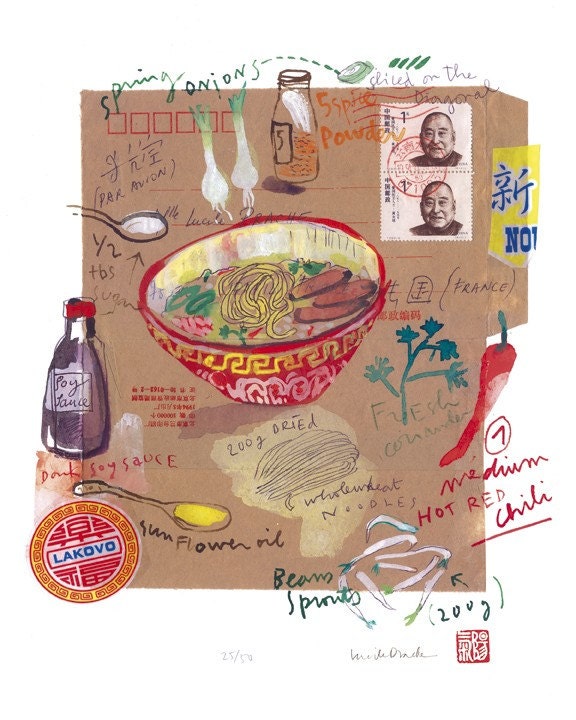

 : This book was the first I'd read that challenged prevailing notions about what I
 : After Atkins, I realized I am not the sort of person who can skip champagne and pass on birthday cake. (Duh!) This book was just what I was looking for. The premise is that French women manage their waistlines not by deprivation, but by increasing the pleasure they take at table. They enjoy quality instead of quantity. They eat slowly. They identify the flavors that make it delicious. They think about the person who prepared it. They enjoy company at dinner. They talk. They sip wine. They savor that first flavorful mouthful and take time over it. (Try and savor cheap fast food. You'll find it impossible because the quality is missing.) Savor something, and you won't over-indulge because you have truly appreciated it. You don't need more. All of this was a revelation that somehow felt like something I had always known.
 : My mother recommended this wonderful book and I enjoyed every moment of it. Written by a priest, you might expect something puritanical and didactic. Instead, it was a celebration of bounty, abundance and jubilation in all creation- especially the living food that we take in to nourish our own lives. This book elaborated clearly and beautifully something I'd felt intuitively for a long time- food is much more than fuel for our bodies. It is a way we connect to other people and nourish our spirits, bodies and each other. At least, this is what it can be at it's best. This book too was all about slowing down and taking time to notice what you are enjoying. This creates space so that you can honor yourself, your body and the people who come in contact with you.
 : Although this book was more memoir than food writing, I loved reading about the travel, adventures, friends, markets, ingredients, shops, pots, pans, letters and intrigues that were the backdrop to Julia Child's extraordinary life in food. This was a woman who was fearless, independent, and creative and understood that good food has the power to bring out the very best in people.
 : Here is another book that reinforced notions I already held dear- that the less processed foods you buy and consume, the better off you are. I especially love that he offers guidelines instead of hard and fast rules because this is how life is. I need flexibility and a down to earth, practical approach to food, not tables, charts, graphs and calculators. I'd rather listen to the advice of cooks and farmers who are on intimate terms with the nature of food than someone who has been busy dissecting things in a lab and reformulating them to sit on a supermarket shelf.
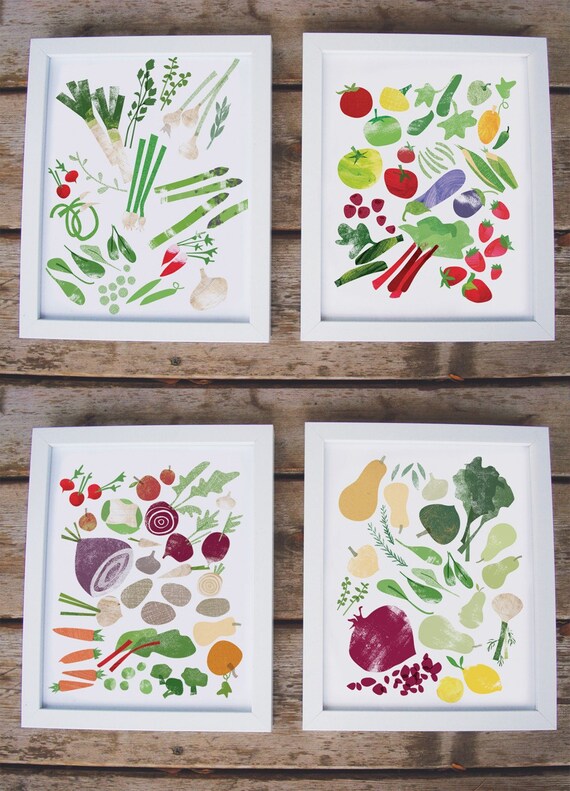
 : By now you may be noticing a trend in my reading- the spine of my food philosophy, so to speak. I am seeking to build a connection between mind, body and spirit through a sensual approach to the physicality of food. This book reminded me that over eating is often misplaced self-medicating. When I mindlessly eat a whole bag of potato chips, I am trying to soothe something that cannot be soothed with food. The causes are variable; boredom, disappointment, anxiety, exhaustion, frustration, loneliness. But I can bravely choose to look deeper at my own mindless eating, at what I am trying to avoid. This awareness opens a doorway to what is sacred inside myself. Potato chips are a cheap, temporary and unacceptable distraction.
 : I've


 . I especially loved the feminine perspective she offers. I wonder how many women feel just this way but are unable to articulate it.

 . I felt inspired to
 Hooray for the public domain!) after reading
